QUICKBASE · PRODUCT STRATEGY
QB2.0 → Pave
Authoring product strategy from the design seat
In the fall of 2024 I wrote a strategy deck arguing that the future of software creation would be no-code, AI-assisted, and won or lost on UX — then presented it to our CEO with a deliberately tiny ask. It became Quickbase's flagship initiative and shipped in 2026 as Pave.
The pitch
Quickbase had spent 25 years democratizing database applications. My argument was that the same democratization was about to happen to software creation itself — and that Quickbase's APIs already contained most of what that future needed. Not a "headless Quickbase," but a new head: back-end database architecture combined with custom front-end building, radically easier than anything a non-expert creator could reach at the time.
Strategy proposals from outside the C-suite survive on two things: cheapness and testability. I asked for roughly two existing people, framed the whole thing as a sequence of proofs-of-concept designed to discover limitations, and put falsifiable numbers on my own beliefs.
The argument, in five probabilities
I structured the case as five claims, each with a confidence level I was willing to defend:
| # | Claim | Confidence |
|---|---|---|
| 1 | There will be ~1 million independent software vendors by 2027 | 90% |
| 2 | Software creation will be AI-assisted | 90% |
| 3 | No-code will be dominant | 70% |
| 4 | LLMs will augment UX — not the other way around | 60% |
| 5 | Software will still have a GUI | 90% |
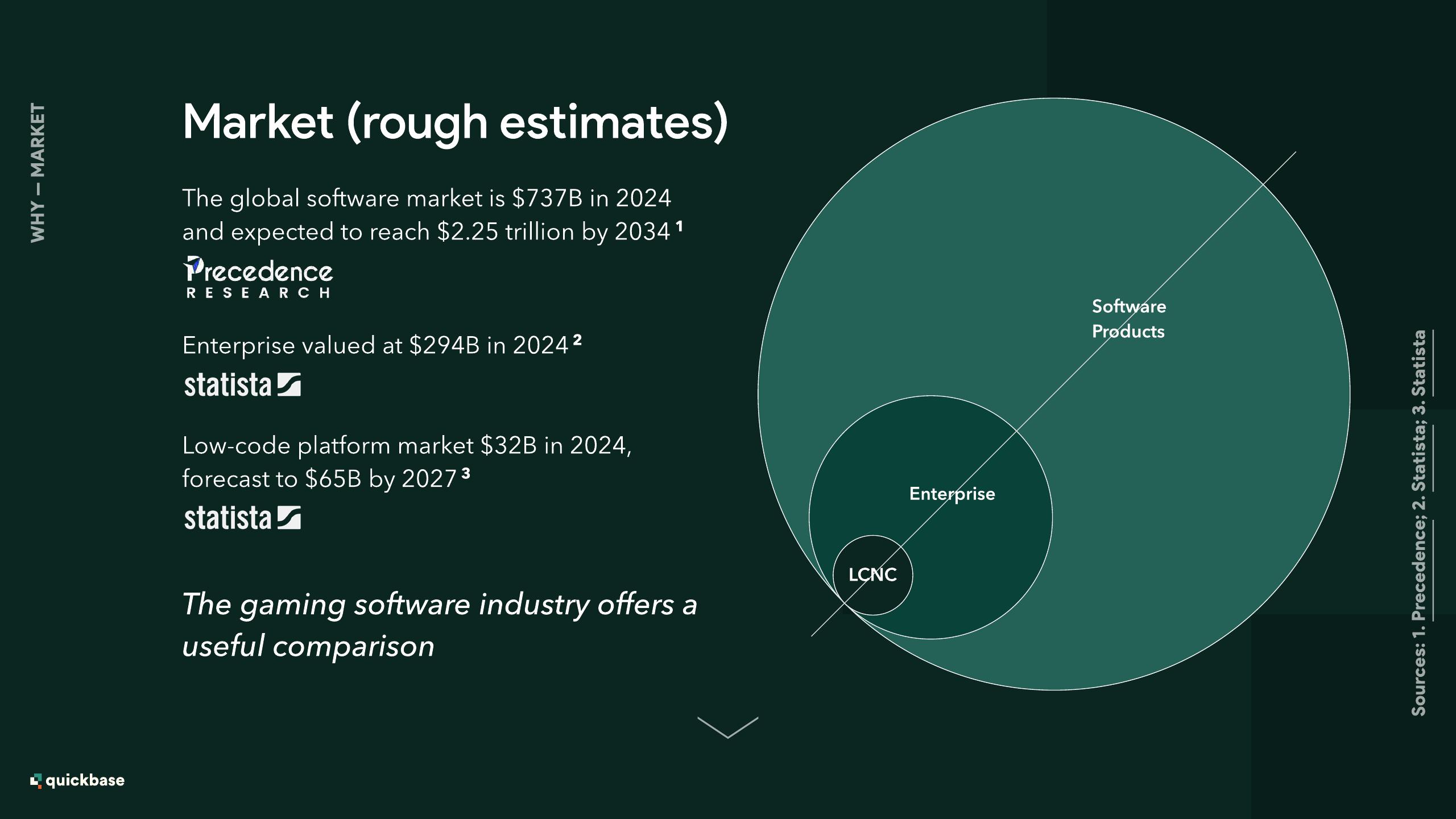
Multiplied honestly, that put my own thesis at 30.6% confidence — and I presented it that way. A strategy stated without falsifiability is just enthusiasm. A 30.6% chance at a piece of a multi-trillion-dollar market, testable for the cost of two people, is a bet worth taking — and framing it as a bet is what made it discussable, challengeable, and ultimately fundable.
Why UX, not pure chat
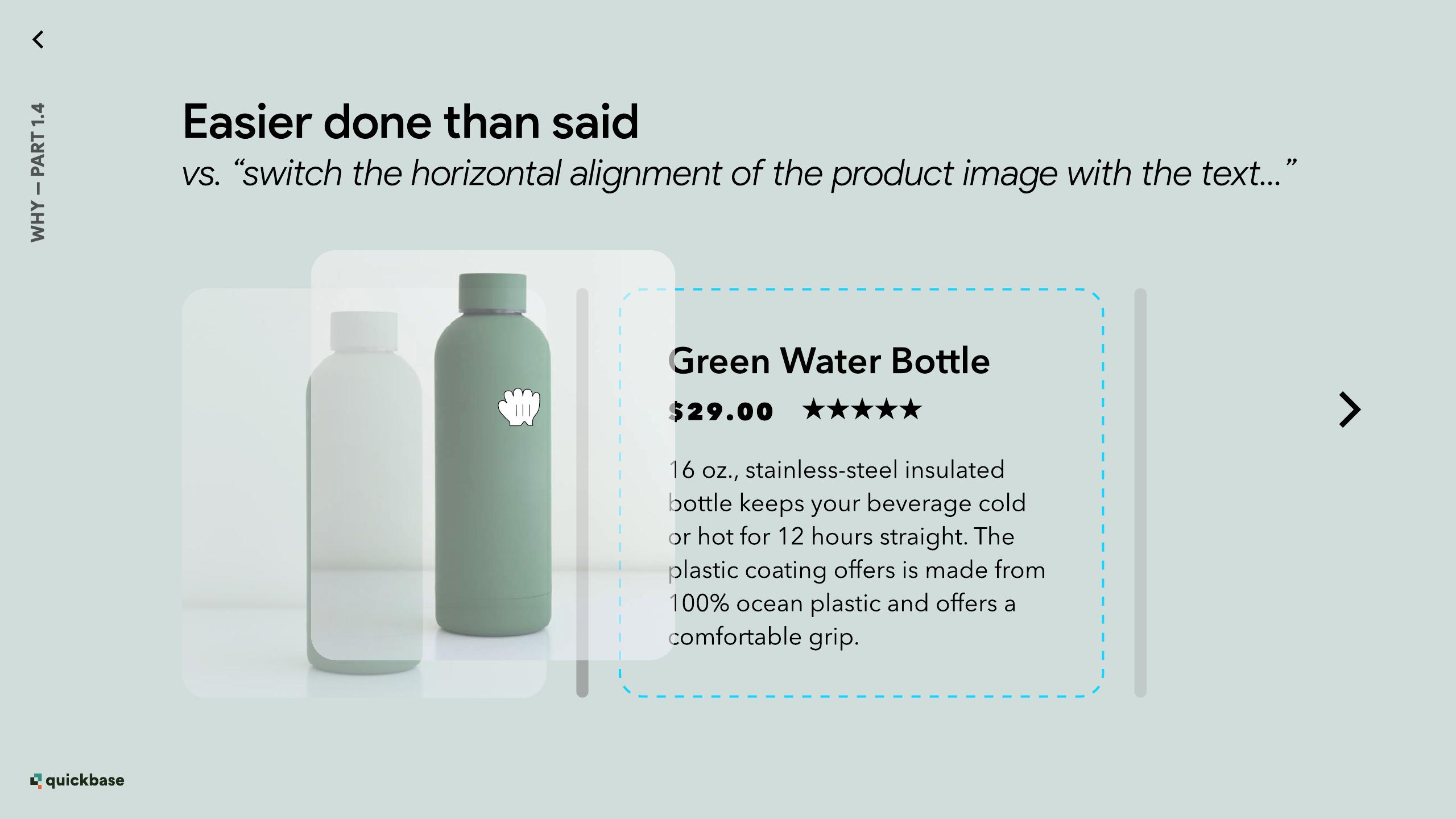
The contrarian core — this was late 2024, peak "chat will replace interfaces" — was probability #4. The limiting factor of a pure-chat creation experience is that users don't know what to ask for: they don't fully understand their own needs, they don't know what's possible, and generating something complex from a simple prompt means the AI makes assumptions on exactly the specifics that matter. Customers can't always articulate what they want, but they know it when they see it — which is why templates beat blank slates, why editing beats describing ("easier done than said"), and why the real gen-AI sweet spot is the middle band of tasks that are hard to execute but easy to explain. The conclusion: AI-assisted creation would need a visual builder environment — a GUI to show what's possible and make editing tactile — with natural language as an accelerant inside it, not a replacement for it.
The market logic
The precedents were hiding in adjacent industries. Web development went from 75% hand-coded to ~75% built on template platforms in a decade — and the winners (WordPress, Shopify, Squarespace) were UX companies, not model companies. Game development consolidated onto engines like Unity and Unreal: creation platforms that made a complex craft radically more accessible without removing the creator. Software creation, I argued, would follow the same trajectory — and most software is, underneath, database software, which is the part Quickbase already had.
What shipped
Pave launched in 2026 as Quickbase's AI-powered application builder — "Say it. See it. Ship it." Real apps, not prototypes: natural-language creation inside a visual environment, with data, hosting, authentication, permissions, and governance built in. The public positioning echoes the 2024 argument almost point for point: a new head rather than a headless platform, AI as the accelerant, UX as the product, and infrastructure as the moat.
SEE IT LIVE
Pave by Quickbase →
The pattern
This is the fourth company where I've authored product strategy from the design seat and seen it become the company's direction: the pivot to live video and creator monetization at Tango, the banking transformation at Credit Sesame, the SMB repositioning at Plastiq, and QB2.0 at Quickbase. Design leadership, as I practice it, isn't a seat at the table — it's bringing the argument the table ends up debating.
Full deck
QB2.0 — The Future of Software Creation in 5 Probabilities (edited deck) · Open full deck
Written from my own strategy work. Internal data, timelines, and roadmap details are omitted deliberately.
Related: Pave by Quickbase · After Comprehension · What Is the Purpose of Software? — Part 1